
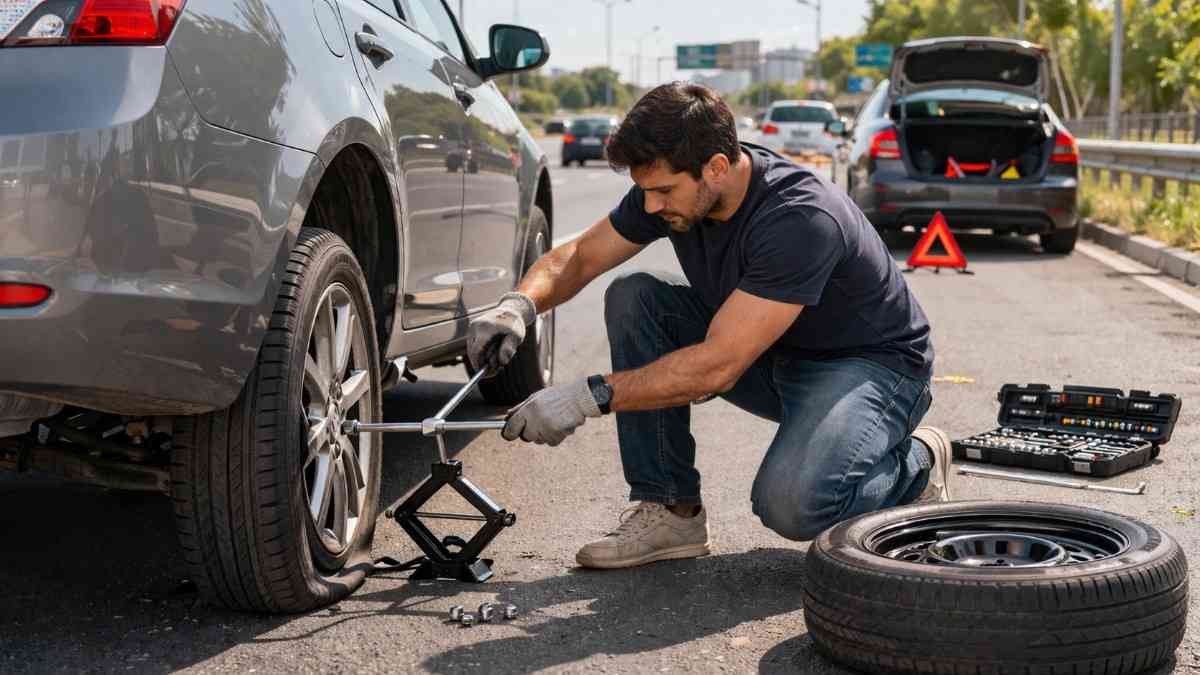
A flat tire can instantly turn a smooth drive into a stressful moment, and knowing how to change car tire gives you control when it matters most. That sense of independence comes from understanding the process and staying calm under pressure. Over time, learning this skill has made every road trip feel more secure and far less dependent on outside help.
Get Set Up Safely Before You Begin
This is the most important step because everything depends on how safely you begin.
Secure The Vehicle Properly
Before doing anything, pull over to a flat and stable surface away from traffic. Turn on hazard lights immediately so other drivers can see you. Engage the parking brake and ensure the car is in park or in gear for manual vehicles.
Taking a moment to stabilize the car reduces the risk of movement. This step often gets overlooked, but it creates the foundation for everything that follows.
Block The Wheels To Prevent Rolling
Placing wheel wedges, bricks, or rocks around the opposite tire helps prevent rolling. This adds an extra layer of safety, especially on slightly uneven ground. From experience, this simple step brings peace of mind. It keeps the vehicle steady and allows you to focus on the task without distraction.
Gather All Necessary Tools
Make sure you have a spare tire, jack, and lug wrench ready before starting. These are usually stored in the trunk or under the vehicle. Checking your tools beforehand avoids interruptions mid-process. Having everything within reach keeps the workflow smooth and controlled.
Loosen Lug Nuts with Proper Technique
This step sets up the entire process and should never be rushed.
Remove The Hubcap If Needed
If your car has a hubcap, use the flat end of the lug wrench to pry it off carefully. This exposes the lug nuts so you can begin loosening them. Doing this gently prevents damage and ensures you can reinstall it later without issues.
Break The Initial Resistance
Use the lug wrench to turn each lug nut counterclockwise. Apply steady pressure until you feel the resistance give slightly. This is often the hardest part physically. Keeping the tire on the ground gives you the leverage needed to loosen them effectively.
Loosen Without Removing Completely
Only loosen the lug nuts about a quarter to half turn. Do not remove them fully at this stage. Keeping them partially attached ensures the tire stays in place while you prepare to lift the vehicle.
Position and Use the Jack Correctly
Lifting the car correctly is where safety and precision come together.
Locate The Correct Jack Point
Check your owner’s manual to find the proper jack point on your car’s frame. Placing the jack incorrectly can damage the vehicle. Positioning matters more than speed here. Taking time to align the jack correctly prevents unnecessary problems.
Raise The Vehicle Carefully
Place the jack under the frame near the flat tire and begin raising the car slowly. Lift it until the tire is about six inches off the ground. The car should feel stable before moving forward. Never rush this step or place any part of your body under the vehicle.
Ensure Stability Before Proceeding
Before removing the tire, gently check that the car is steady. If there is any movement, lower it and adjust the jack position. This extra check builds confidence and reduces risk during the tire swap.
Raise the Vehicle with Full Control
This is the moment where the actual replacement happens.
Remove The Flat Tire
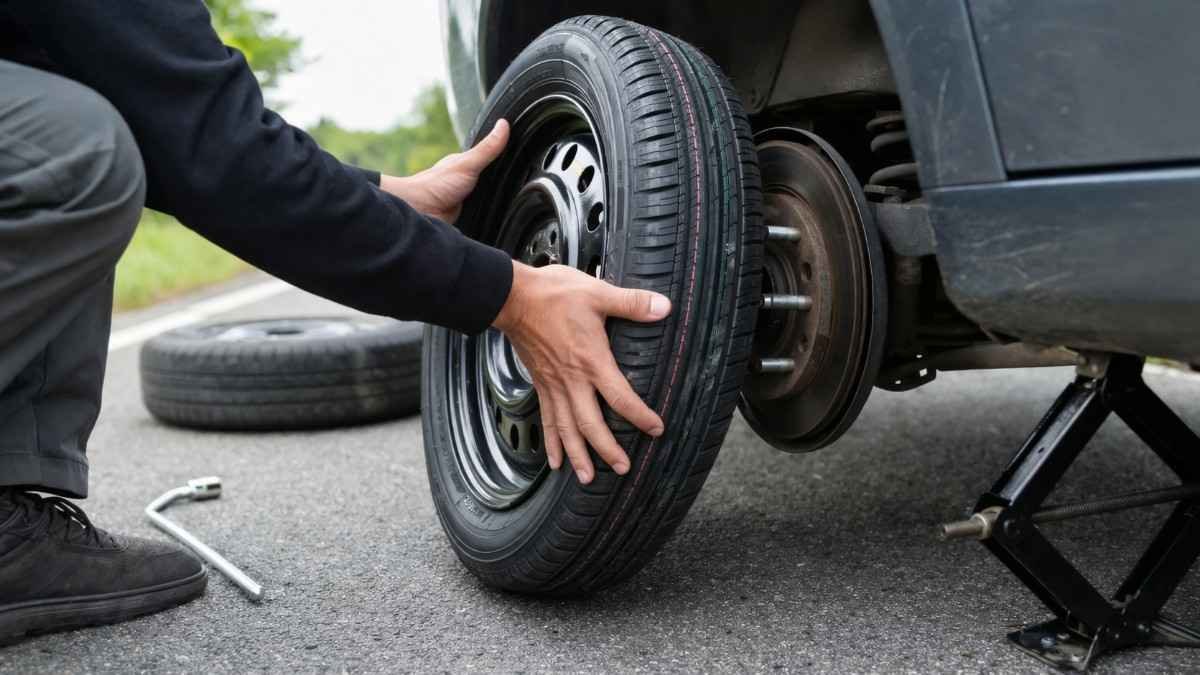
Fully unscrew the loosened lug nuts and keep them in a safe place like a hubcap. Pull the flat tire straight off the wheel studs. This step becomes easier once everything is loosened properly. Keeping track of the lug nuts avoids unnecessary delays.
Mount The Spare Tire
Align the spare tire with the wheel studs and push it into place. Ensure the holes line up correctly so the tire sits flush. Taking your time here prevents misalignment. A properly placed spare makes tightening much smoother.
Hand Tighten The Lug Nuts
Put the lug nuts back on and tighten them by hand as much as possible. This secures the tire temporarily before final tightening. Hand tightening helps hold the tire in place and prepares it for the final step.
Secure the Wheel with Final Tightening
This final stage ensures the tire is safe for driving.
Lower The Car Slowly
Turn the jack handle in the opposite direction to lower the car. Let the tire touch the ground but avoid placing full weight immediately. Controlled lowering helps maintain balance and keeps everything aligned.

Tighten Lug Nuts In A Star Pattern
Use the lug wrench to tighten the nuts in a crisscross pattern. This ensures even pressure across the wheel. This technique is essential for safety. It prevents uneven tightening and keeps the wheel properly secured.
Complete The Final Tightening
Once the car is fully lowered, give each lug nut a final firm pull. Ensure they are as tight as possible before driving. This final check adds confidence and ensures the job is done correctly.
Mistakes That Can Ruin the Process
Understanding what not to do can save you from repeat problems.
Skipping Safety Steps
Ignoring hazard lights or wheel blocking increases risk significantly. These small actions make a big difference in real situations. Staying visible and stable should always come first before touching any tools.

Rushing Through The Process
Trying to finish quickly often leads to mistakes like loose lug nuts or improper alignment. Taking a steady approach works better every time. A calm process not only improves safety but also builds long-term confidence.
Forgetting Post Change Checks
After driving a short distance, lug nuts should be rechecked for tightness. Many defensive drivers forget this important step. This final habit ensures the tire remains secure and avoids future issues.
Frequently Asked Questions
1. How to change car tire if I am alone?
Follow the same steps carefully, prioritize safety, and choose a well-lit location. Preparation matters more than assistance.
2. How long does it take to learn how to change car tire?
Most people learn the basics in one attempt, and it becomes easier with practice.
3. Can I drive fast after learning how to change car tire?
No, especially with a temporary spare. Drive slowly and replace it soon.
4. Do I always need professional help?
Not always. Knowing how to change car tire allows you to handle most flat tire situations independently.
This Skill Stays With You
Learning how to change car tire is one of those practical skills that continues to pay off every time you drive. It builds confidence to travel like a local, reduces stress, and prepares you for unexpected situations on the road. The more you practice and understand the process, the more natural it becomes, turning a frustrating breakdown into something you can handle calmly and efficiently.