Ever stared up at the night sky and wondered ‘how do black holes form?’ These are the invisible forces that lurk within the cosmos? For me, the mystery of black holes has always been one of the most intriguing. The idea that something could have such a strong gravitational pull that nothing, not even light, could escape it seemed almost unbelievable.
But here’s the thing: black holes are real, and they play a crucial role in the universe’s structure. So, if you’ve ever found yourself asking, “How do black holes form?”. Let’s explore deep into this cosmic enigma.
What Is a Black Hole and How Does It Form?
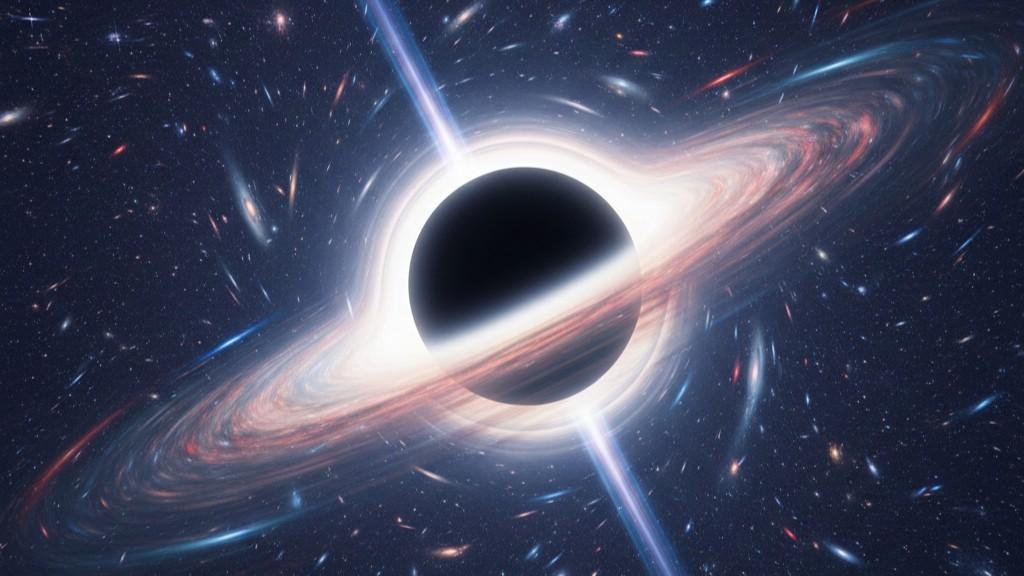
Before we jump into the specifics of how black holes form, let’s take a moment to understand what they actually are. A black hole is a region in space where gravity is so strong that not even light can escape it.
This immense gravitational pull occurs when a massive amount of matter gets compressed into an incredibly small space, often due to the death of a massive star or other cosmic events. Now, let’s take a closer look at the most common ways black holes come into existence.
How Do Stellar-Mass Black Holes Form?
The most common method by which black holes form is through the death of massive stars. This process results in what we call stellar-mass black holes, and it happens in several dramatic stages.
Running Out of Fuel: The Life Cycle of a Massive Star
Stars spend most of their lives fusing lighter elements like hydrogen into heavier ones, releasing enormous amounts of energy that push outward against the force of gravity pulling inward. When a star—at least 20 times the mass of our Sun—runs out of nuclear fuel, it can no longer support itself against its own gravity. The outward pressure from fusion stops, and gravity takes over.
Gravitational Collapse: The Core Crashes
Without the outward pressure from fusion, the core of the star begins to collapse under its own weight. This collapse happens in mere fractions of a second, and the density of the core increases dramatically. As the core collapses, it becomes incredibly dense, eventually forming what we call a singularity—a point where the laws of physics as we know them no longer apply.
Supernova Explosion: The Outer Layers Explode
During this collapse, the outer layers of the star are often blasted away in a violent explosion known as a supernova. This is one of the most powerful events in the universe. The remaining core, however, continues to collapse inward, becoming so dense and compact that it forms a black hole. The explosion marks the birth of a stellar-mass black hole, and it’s often observed in distant galaxies, giving scientists valuable clues about the formation of these cosmic beasts.
How Do Supermassive Black Holes Form?
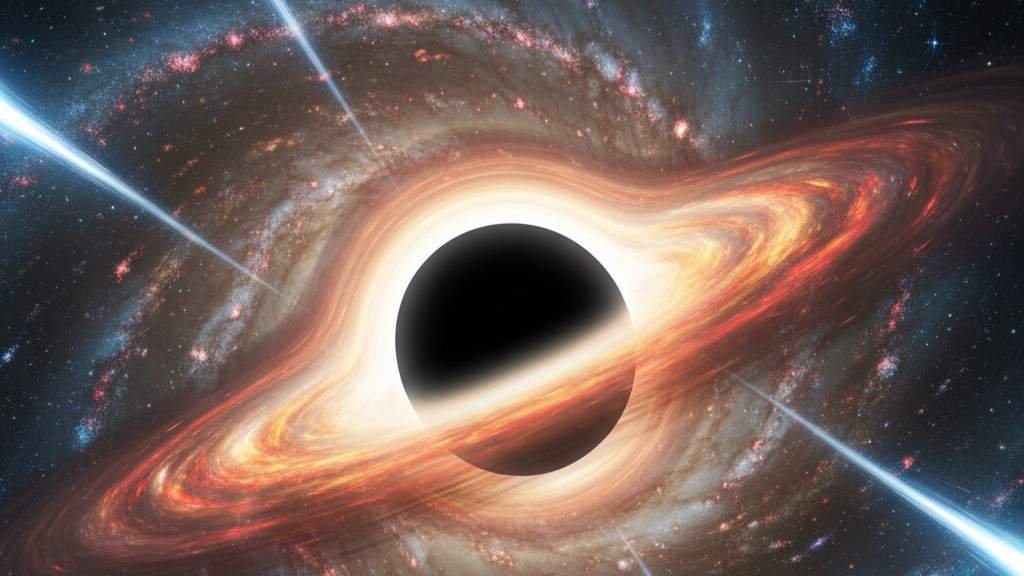
While stellar-mass black holes are the most common, supermassive black holes are the true giants of the universe. These black holes are millions to billions of times more massive than our Sun, and their formation is still a subject of intense research.
Direct Collapse: A Mystery of the Early Universe
One leading theory is that supermassive black holes formed through a process called direct collapse. In the early universe, massive clouds of gas may have collapsed directly into a black hole without first forming a star. This collapse could have occurred when the universe was just a few million years old, and these early black holes could have grown rapidly over time.
Black Hole Mergers: Collisions of the Cosmos
Another possible origin for supermassive black holes is through the merging of smaller stellar black holes. These smaller black holes can come together over billions of years, gradually building up to supermassive sizes. The merging of black holes is a process that is still being studied, and scientists have observed ripples in space-time known as gravitational waves, which are thought to be caused by such mergers.
Rapid Feeding: Growth Through Consumption
Early black holes may have grown exceptionally fast by consuming vast amounts of gas, stars, and other matter from their surroundings. As they sucked in material, they could have built up enormous amounts of mass, eventually growing into supermassive black holes. This rapid growth could have been accelerated by the abundance of gas in the early universe.
How Do Other Types of Black Holes Form?
While stellar and supermassive black holes are the most well-known, there are other fascinating ways black holes can form.
Neutron Star Collisions: A Violent Event
When two neutron stars, extremely dense remnants of stars—collide, they can merge to form a new black hole. This process is similar to the merging of stellar-mass black holes but occurs when the objects involved are neutron stars instead of black holes. Neutron star collisions are rare, but when they do occur, they release massive amounts of energy in the form of gravitational waves, which scientists can detect with advanced instruments.
Primordial Black Holes: Born from the Big Bang
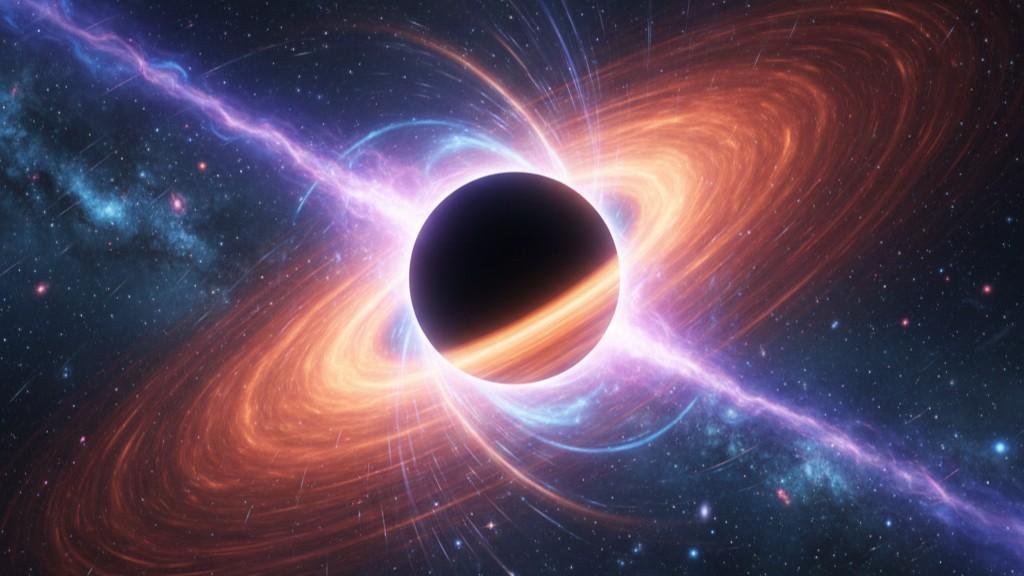
Some scientists believe that black holes could have formed in the immediate aftermath of the Big Bang. These are called primordial black holes, and they may have formed due to the high-density fluctuations in the very early universe.
Unlike stellar or supermassive black holes, primordial black holes are thought to have formed before stars even existed. While they might be smaller than the black holes we observe today, they could still hold valuable clues about the formation of the universe itself.
How Do Black Holes Form? Step-by-Step
Let’s break down how black holes form into easy-to-follow steps:
- Massive Star Runs Out of Fuel: A star burns through its nuclear fuel, and the outward pressure that supports it against gravity fades.
- Core Collapses: Without support, the star’s core begins to collapse under its own gravity, becoming increasingly dense.
- Supernova Explosion: The outer layers of the star are blasted away, and the remaining core collapses into a singularity, forming a black hole.
- Black Hole Growth: Once formed, a black hole can grow by consuming surrounding matter or merging with other black holes.
This process happens over millions of years, but it all starts with a dying star.
Frequently Asked Questions
1. Can black holes disappear over time?
Yes, black holes can slowly evaporate through a process known as Hawking radiation. This process is incredibly slow, especially for large black holes, but eventually, they could lose enough mass to vanish completely.
2. Do black holes have a limit on their size?
In theory, there is no limit to the size a black hole can reach. Stellar-mass black holes can grow through mergers or by accumulating matter over time, and supermassive black holes can grow even larger. The largest known black holes have billions of times the mass of the Sun.
3. Can a black hole destroy a planet?
While a black hole’s gravity is incredibly strong, it will only destroy objects that venture too close—past the event horizon. A planet would need to get very close to a black hole to be destroyed, which is why black holes at the centers of galaxies don’t pose a direct threat to planets in our solar system.
4. Can a black hole be created without a star?
Yes, primordial black holes, which may have formed right after the Big Bang. They are thought to be created without the need for a star. These black holes could be smaller than stellar-mass black holes but still fascinating in their own right.
The Fascinating Formation of Black Holes
So, how do black holes form? Whether through the death of massive stars, the merging of smaller black holes, or even the mysterious processes in the early universe, black holes come into existence in a variety of awe-inspiring ways. They are the ultimate cosmic puzzle—mysterious, powerful, and critical to our understanding of the universe.
Next time you look up at the stars, just remember that somewhere out there, a black hole is quietly doing its thing, bending space and time, and keeping scientists busy trying to figure out its secrets. And who knows? Maybe we’ll learn even more about these cosmic giants in the years to come.